
Hey friends, welcome back to the blog.
If you’ve been following me for a while, you know I usually talk about the IMAT exam, registration processes, and how to get into medical school in Italy. But today, I want to switch gears.
I’m currently a 3rd-year medical student, and we are finally moving from textbooks to the real world. I recently started my clinical rotations, and I want to take you with me inside the hospital.
Specifically, I want to talk about my very first experience inside the Operating Theatre (OT). It was a 5-hour long surgery for a Cervical Vertebrae Adjustment, and honestly? It changed the way I look at medicine.
The Pre-Surgery Jitters
So, picture this. It’s early morning. I’m putting on my scrubs, wearing the mask, the cap the whole look.
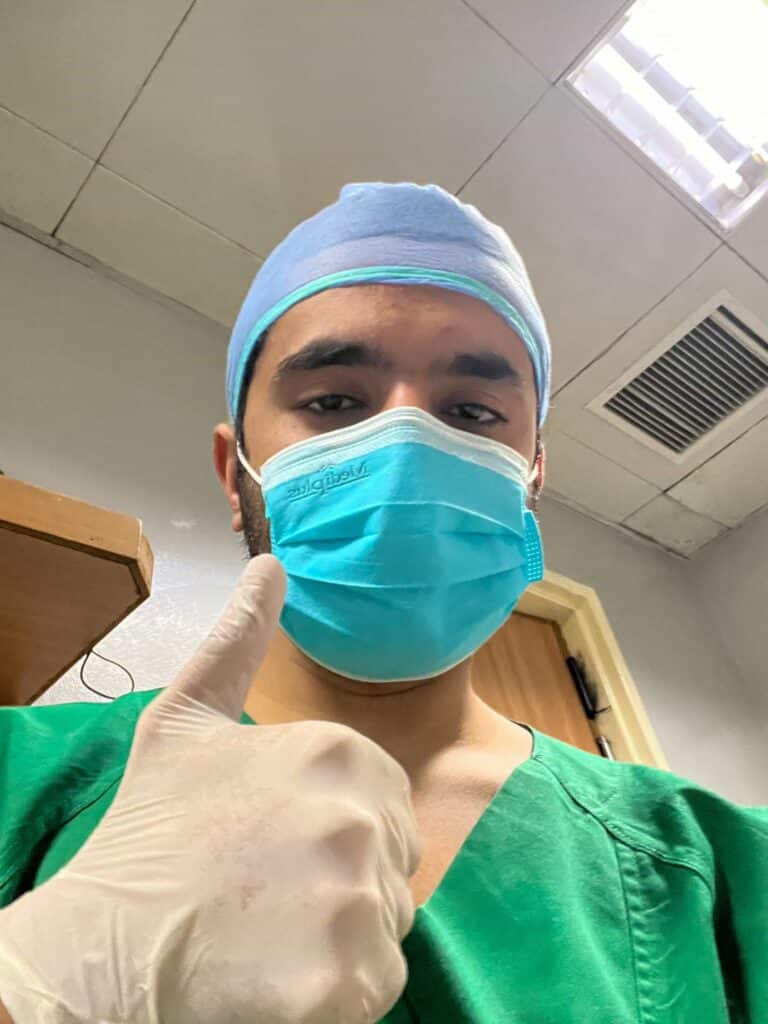
I’ve always said I don’t fear blood. In fact, I was really excited to “wash” (that’s the term we use for scrubbing in and sterilizing your hands before surgery). But I’m not going to lie to you when I walked through those double doors, I had a little anxiety on my face.
It’s one thing to study anatomy in a book; it’s another thing to see a living, breathing patient on the table with their spine exposed.
During Surgery
The surgery was a complex one. The patient needed a cervical vertebrae adjustment. For those who are just starting out, the cervical vertebrae are the seven bones in your neck that support your skull. When these get misaligned or damaged (often due to trauma or degenerative diseases like stenosis), it can put dangerous pressure on the spinal cord.
I’ve been reading papers from The Spine Journal and The Lancet to understand this better. Basically, the goal is to decompress the spinal cord and stabilize the neck. It’s high-stakes work because the margin for error is zero.
The lead surgeon was incredible. He was really intelligent and influential the kind of doctor who walks in and commands respect without even shouting. (but he did got mad and angry as an important tool was missing)
The most fascinating part was the “burring” process. There is a specific tool, kind of like a high-precision drill, used to cut and shape the bone. Watching the surgeon work was like watching an artist. He was so precise, removing just enough bone to relieve the pressure but keeping the structure intact. I was standing there for 2-3 hours. My legs were tired (although I was sitting LOL), but my mind was fully awake. Seeing that level of skill made me think about my own future.
“Do I want to be a surgeon?”
Before this, I wasn’t sure. But seeing the immediate impact you can have on a patient’s life… it’s really tempting.
While the surgeon works on the bone, there is a whole other war happening at the head of the table. The anesthesia team is vital. Literally. I spent a lot of time watching the ventilator and the vitals monitor. As a medical student, you learn about physiology, but seeing it in real-time is different. You are watching:
- SpO2 (Oxygen Saturation): Making sure the blood is oxygenated.
- Heart Rate & BP: Keeping the patient stable while their body is under immense stress.
- Capnography: Monitoring the CO2 being exhaled.
It’s a team effort. The surgeon focuses on the neck, and the anesthesia team focuses on keeping the patient alive. And you get to know that anesthsia is more important then the whole surgery itself cuz you don’t just sedate the patient, its your job to awake the patient as well and thats heck of a job.
My Takeaways
I took tons of pictures and videos (obviously following privacy protocols) because I wanted to remember this moment.
If you are preparing for the pre-med exam or just starting med school, remember this: The hard work is worth it. All those hours studying biology and chemistry are just the entry ticket to get into this room. Being in that surgery, seeing the scalpel, the suction, the drills, and the teamwork it gave me a huge spike of motivation. I’ll be sharing more of my experiences from surgery, medicine, and anesthesia rotations soon. I want to show you the reality of this life the good, the bad, and the bloody.
Have you ever shadowed a doctor or seen a surgery? Let me know in the comments.
If you enjoyed this post, subscribe to my newsletter for more behind-the-scenes of these days.
See you in the next one!
Sami
